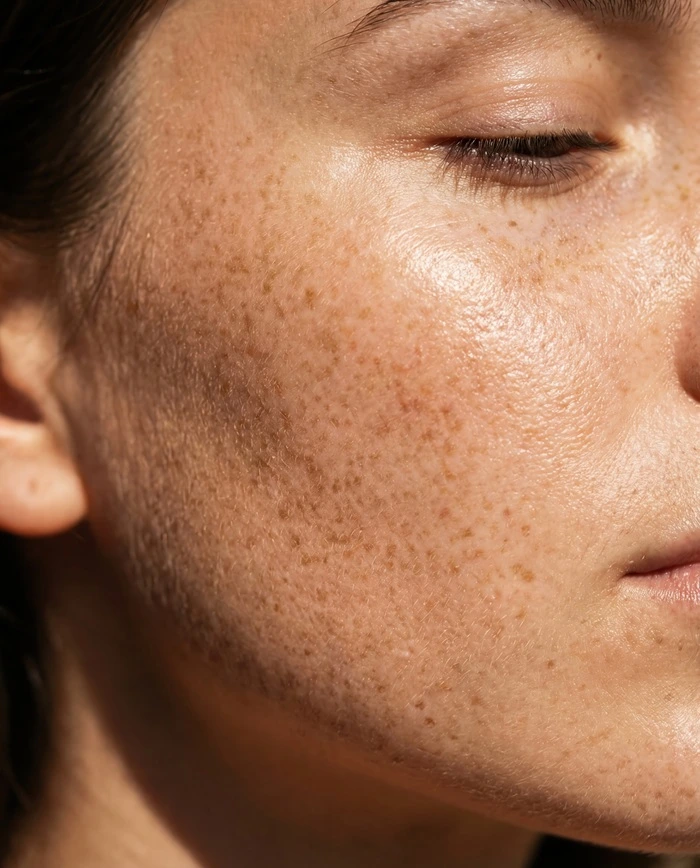
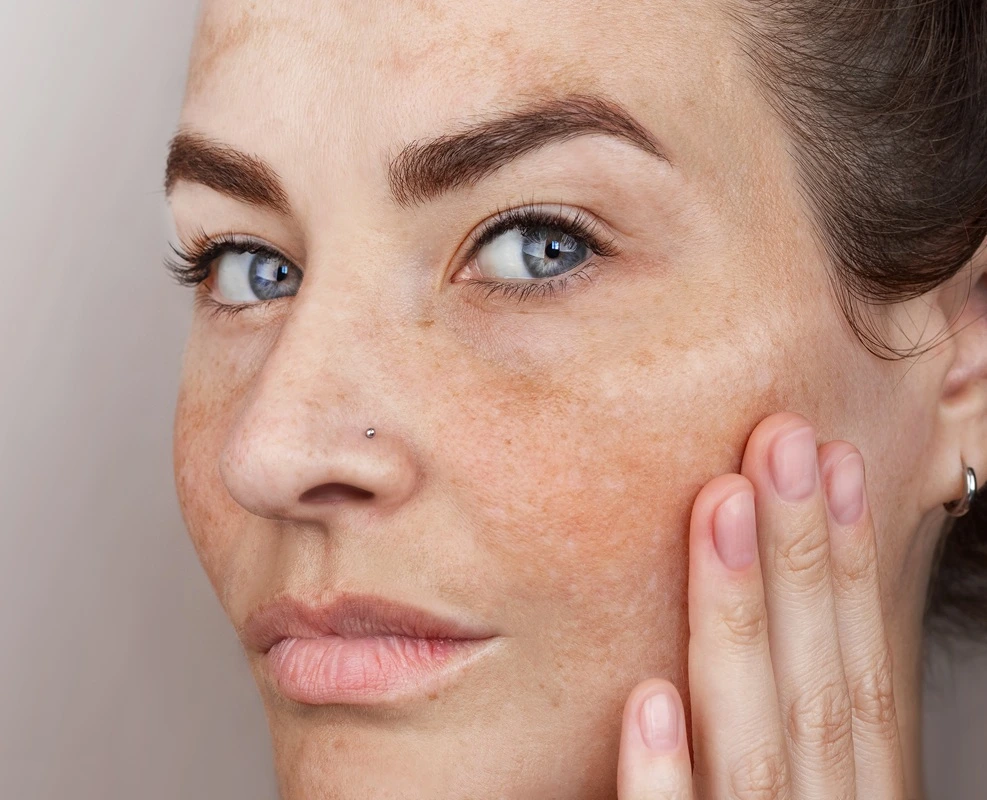
Clinical-grade chemical peels at D&A Esthetics Med Spa treat persistent darkening, dark spots, and skin discoloration in Lynn, MA, with most patients seeing visible lightening after 2 to 3 peel sessions. Whether you are dealing with sun spots, patchy skin tone, facial discoloration, or the symmetric brown patches of a chronic pigment condition, the root cause is melanin produced in excess by skin cells responding to UV exposure, hormonal signals, or inflammatory injury. Effective treatment addresses both the visible pigment and the triggers that bring it back.
We treat resistant discoloration, uneven complexion, and pigment patches using clinical-grade chemical peels and targeted skincare protocols. Hormonally triggered pigmentation alone affects up to 1 in 4 women of Hispanic, South Asian, Southeast Asian, and Middle Eastern heritage, all communities well-represented in Lynn. Effective treatment requires formula expertise and strict sun protection discipline, and we build both into every plan from the first consultation. Patients who commute along Route 1A (the Lynnway) toward Boston experience asymmetric UV exposure through the driver’s-side window. This well-documented dermatological pattern activates and sustains brown facial patches in predisposed patients.

Melanin-related discoloration has several distinct causes: UV-induced sun damage (freckles and age spots), post-inflammatory hyperpigmentation from acne or injury, hormonal symmetrical facial pigmentation (the symmetrical brown patches often triggered by pregnancy, hormonal contraceptives, or HRT), and vascular discoloration from persistent redness or broken capillaries. Each type responds to different treatments, which is why accurate identification at your consultation is essential. Aggressive treatment of the wrong type, particularly a chronic pigment condition, can significantly worsen the condition.
Brown or gray-brown pigment patches on the forehead, cheeks, upper lip, or jawline (symmetrical facial pigmentation pattern)
Flat sun spots in sun-exposed areas (cheeks, nose, shoulders, or forearms) that have darkened over time
Persistent dark marks where pimples or skin injuries healed (post-inflammatory hyperpigmentation)
Patchy skin tone that makes your complexion look inconsistent in certain lighting
Facial discoloration that darkens noticeably after sun exposure and fades partially in winter
We identify your specific discoloration concern type at consultation before recommending any treatment. IPL and pico laser technologies are highly effective for sun spots and vascular pigmentation; these are not currently offered in-clinic at D&A Esthetics, and we make appropriate referrals when they are the strongest clinical match. For the brown facial patches, PIH, and uneven complexion presentations we treat in-clinic, our core tools are the following.
The VI Peel® blend of TCA, salicylic acid, vitamin C, and tretinoin directly addresses melanin overproduction and speeds cellular turnover, improving uneven complexion progressively. The VI Peel® Precision Plus adds enhanced brightening agents specifically formulated for chronic pigment conditions and resistant hyperpigmentation. It is one of the most effective single-treatment options available for patients with moderate-to-severe persistent darkening across a range of skin tones.
For patients with sensitive skin, darker complexions, or active hormonally triggered pigmentation that requires a gentler approach, the Face Reality® progressive peel protocol reduces pigment irregularities incrementally while protecting the skin barrier from the inflammatory disruption that can trigger further melanin production. Often, the safer first step for Fitzpatrick Types IV-VI with facial discoloration.
LED red light therapy complements in-clinic peel treatments by calming post-inflammatory activity and supporting skin barrier repair. It is used as an adjunct rather than a standalone treatment for discoloration concerns, particularly in patients with reactive skin working through a progressive lightening protocol for pigment patches.
In-clinic treatments for pigment irregularities are only as effective as the home care supporting them. Every protocol includes prescription-grade brightening actives (azelaic acid, kojic acid, niacinamide, retinoids) and strict daily SPF. Without consistent sun protection, any improvement in resistant discoloration will be short-lived.
Chronic pigment condition and post-inflammatory hyperpigmentation are among the top three skin concerns in communities of color globally. In Lynn, one of the most ethnically diverse cities on the Massachusetts North Shore, with large Hispanic, Latino, Cambodian, Brazilian, and West African communities, patchy skin tone and facial discoloration are not rare presentations. They are the norm. The North Shore’s outdoor lifestyle compounds the picture: patients spending warm months along the Lynn Shore Drive and Nahant Beach accumulate the UV exposure that both triggers new pigment patches and reactivates existing ones. Strict sun protection is not optional here; it is fundamental, and we build that education into every patient interaction. For patients targeting the North Shore spring and summer seasons, starting a symmetrical facial pigmentation protocol in October or November creates a winter treatment window that yields the most durable improvement before UV season returns.
D&A Esthetics Med Spa is reachable from Lynn Station on the Newburyport/Rockport MBTA commuter rail for patients traveling from Boston or the northern suburbs.
Hormonally triggered pigmentation can be significantly reduced and managed, but it cannot be permanently cured. It is a chronic, hormonally influenced condition that tends to recur with sun exposure or hormonal changes. Consistent treatment and maintenance, including year-round SPF, are what keep resistant discoloration under control.
Most patients see visible lightening of sun spots and post-inflammatory marks after 2 to 3 peel sessions. Chronic pigment condition responds more slowly and may require 4 to 6 sessions with strict sun protection for meaningful improvement in facial discoloration.
Yes. Persistent darkening in darker skin tones is safely treatable with the right formula and technique. Aggressive peels in darker skin can worsen patchy skin tone through inflammatory hyperpigmentation. Both VI Peel® and Face Reality® protocols offer formulas specifically selected for Fitzpatrick Types III through VI.
Uneven skin tone, dark spots, and melasma are among the most addressable skin concerns when approached correctly. At D&A Esthetics Med Spa in Lynn, MA, we match the protocol to your pigmentation type, your skin tone, and your lifestyle. Schedule your skin discoloration consultation today.
Whether it’s your first visit or not, we want you to feel comfortable from the moment you walk in. Our team takes the time to listen, answer your questions, and help you choose treatments that feel right for you.
Booking is easy and available online anytime. Browse our services and choose what fits your needs, whether it’s wrinkle relaxers, dermal fillers, facials, laser hair removal, or something more customized. If you’re unsure where to start, we’re here to guide you.